
If you’re thinking, “I need to get in shape before I come to your gym,” here’s what I’d tell you: every person has a different starting point. You don’t need to match the weights of the person next to you. We’ll find a starting point that makes sense for you.
I know coming back can feel intimidating, especially if you remember being stronger or more consistent. At Warrior Sports Performance, the first month gives us time to learn where you are now and build a routine you can keep. There’s no need to prove what you used to do on the first day.
We start with a conversation
Before you come in, I ask a few practical questions. Is there anything injury-wise we should know? What experience have you had in the gym? What has your activity looked like over the past six to twelve months? We keep talking during the warm-up, so I can understand what you’re hoping to get out of training.
If you mention back discomfort, I’ll ask when it shows up, what you’ve tried, when it last bothered you, and whether you’ve spoken with a doctor. Those details matter more than assuming two people with a sore back need the same workout.
Exercise modifications aren’t a diagnosis or a treatment plan. New unexplained, persistent, recurring, or otherwise concerning pain deserves medical assessment. You don’t need to wait until pain is unbearable. Back pain with numbness, tingling, or weakness also needs medical attention rather than being treated as something to work through in the gym. [1] [2]
Your first workout is a chance to learn
I don’t want to crush somebody on their first workout. I’d rather you leave saying, “That was a little easy,” than feel overwhelmed and dread coming back.
There’s plenty to learn without chasing exhaustion: the names of the exercises, how sets and reps work, where to go next, and how we share the space. I explain what we’re doing and why as we go. Getting comfortable with that flow is useful work.
We start cautiously with the weights, usually working with two or three sets, adjusted to the person. If you used to press much heavier dumbbells but haven’t trained consistently in years, I’m not handing you the old weights straight away. We start lighter, see how the movement looks and how difficult it feels, and decide whether a small increase makes sense.
For a goblet squat, I might be happy with two easy sets followed by a moderate third set. That’s an example, not a rule for everybody. I’m not measuring the session by how sore I can make you. I want you learning the movements and building a base we can work from.
Choose a routine you can actually keep
For someone getting back into training around work and family, I usually suggest starting with one or two workouts a week. Once that feels manageable and you’re enjoying it, we can talk about adding more. I’d rather help you keep a realistic commitment than start with a schedule you can’t sustain.
That starting point is about building the habit. General adult health guidance recommends strengthening all the major muscle groups on at least two days a week, alongside aerobic activity. Federal guidance also advises inactive people to start at a manageable level and increase gradually. [2] [3]
Keep the next goal small enough to act on. Maybe it’s attending your weekly session and adding a short walk after dinner on a few days. After a month, we can look at what you’ve actually managed and consider the next step. You don’t have to change your whole routine at once.
Look for progress beyond the scale
If you’ve trained for a month and your weight hasn’t changed, I don’t want us to overlook everything else. Let’s look at the workouts.
For example, you might start with a light goblet squat for eight repetitions and later do those same eight controlled repetitions with a heavier weight. Looking back at the workout record gives us something concrete to recognize. We can compare what you’re doing now with your own starting point.
I also ask about daily energy. Are you feeling more energetic? How are you getting through the afternoon? Your answers help us talk about how training fits into your life. I remind people that early sessions include a lot of learning. Give yourself time to build on that, and let’s keep checking in rather than expecting a dramatic change after one month.
A missed week doesn’t need an apology
If work or family gets hectic and you miss some training, you have no reason to be embarrassed. I’ve been there myself.
While I was building out the gym in summer 2026, my own workouts took a hit. Between the administrative work, equipment, and cleaning, there was always something else that needed doing. I would normally train five or six times a week. During that stretch, I was lucky to get one or two workouts in.
Life interrupts routines. When you return, we’ll look at how you’re feeling and how long you’ve been away. I wouldn’t automatically put you straight back at your previous weights, but I wouldn’t automatically send you back to day one either. Often, a few modest adjustments are the place to start. The amount depends on you.
You’re joining people who understand
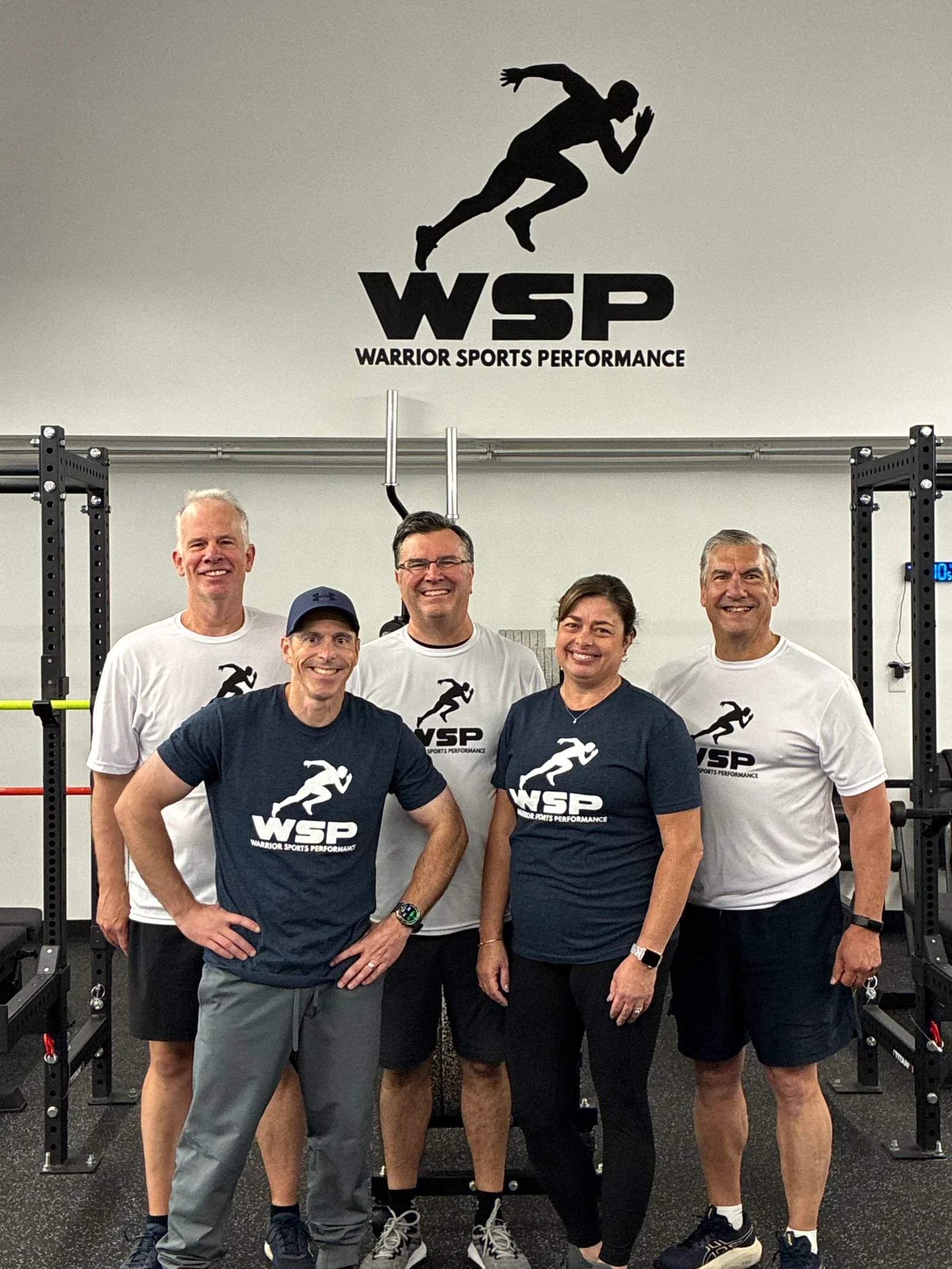
Many of the adults I coach met through training here. They’ve built a community around wanting to feel and move better. They understand busy weeks, family responsibilities, and time away from the gym.
I see people genuinely happy to have someone back after a break. You don’t need to walk in already keeping up with somebody else. Bring your starting point, your questions, and a willingness to learn. We’ll help take the guesswork out of getting started.
If you’re ready to talk about returning to strength training at WSP in Norfolk, MA, contact [email protected]. Tell me where you’re starting, and we can talk about the next step.
Sources
[1] National Institute of Arthritis and Musculoskeletal and Skin Diseases. Back Pain.
[3] Centers for Disease Control and Prevention. Adult Activity: An Overview.