
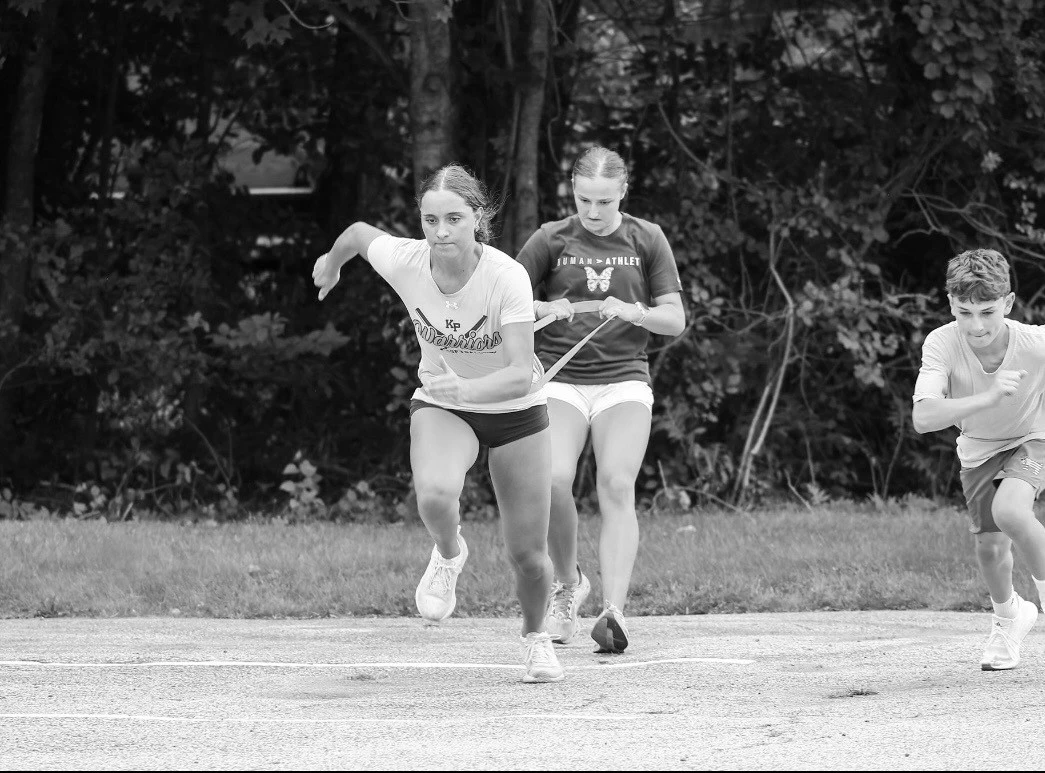
“My child said there was a lot of rest between sprints. They didn’t leave exhausted. Was that really a good workout?”
Yes, it can be. If we’re working on speed, I want your child ready to run fast when it’s their turn. Rushing them into another run just to keep them moving can change what we’re training.
At Warrior Sports Performance, we sprint with intention. I might tell a group, “You have three chances to run your fastest 10-yard fly today.” That gives each attempt a purpose. Three attempts is an example of a session I coach, not a prescription for every athlete.
Give each sprint a purpose
Conditioning helps athletes sustain effort or repeat it. Speed work gives them opportunities to practice moving fast. Both belong in training, and there can be overlap. But repeated runs with short rest are a different task from a few high-quality sprints with enough recovery to run fast again. NSCA guidance emphasizes recovery and technical quality when developing speed. [1]
When we include conditioning, I put it toward the end of the workout. I don’t want the speed portion turning into a contest to see who can get the most tired.
The rest depends on the run and the athlete. A short start and a longer sprint don’t necessarily need the same recovery. There isn’t one stopwatch rule that tells me every child is ready. For genuinely high-speed efforts, recovery may need to be longer than a minute or two. The point is to support the next effort, not rush through a fixed rest interval. [1]
A slower time also doesn’t automatically mean they needed more rest. They may have stumbled at the start or had a less focused attempt. I have to look at what happened. Not every repetition will be better than the last.
Practice the skill they need
When a parent says their child needs to get faster, I want to know where they’re struggling. Are they slow getting started? Having trouble stopping and turning? Looking quick in drills but reacting late in a game?
An athlete who struggles with the first few steps needs practice starting and accelerating. I look at their movement and whether power work belongs in the plan. For an athlete who struggles to change direction, we need to practice slowing down, turning and accelerating again. You don’t get better at those skills without practicing them.
The cue has to fit the movement. Accelerating from a start and running near top speed involve different body positions and force demands, so I wouldn’t give every athlete the same instruction about leaning or where to put their foot. [2]
We also use leader-and-follower mirror drills. Instead of following a route through cones, one athlete has to respond to where their partner goes. In another drill, I might use a clap to signal a change from sprinting to backpedaling and back again. Those drills add a reaction and a decision. They don’t replace learning to read the game during sport practice.
Build control before quicker jumps
Strength training and plyometrics can support speed development, but they don’t make sprint practice unnecessary. Research in young soccer players has found benefits from combining resistance work with plyometric and sprint training. That doesn’t guarantee the same result for every athlete or automatic improvement in a game. [3]
With hurdle jumps, we focus on landing control before adding speed. A new athlete starts by sticking each landing. I want them to learn to absorb the landing and keep their balance before asking them to bounce quickly into the next jump.
From there, we may add one or two small hops between hurdles. That gives them a chance to find their balance and rhythm before moving to continuous hops from one hurdle to the next.
Even my experienced athletes stick the first round. After that, they may use the mini-hop or continuous version, depending on their control. If I move someone to continuous hops and they’re all over the place, we go back to sticking the landing. There’s no prize for doing the harder version before you can control it.
Fit training around the whole week
Speed training needs to fit the demands of an athlete’s full week, including practices, games and recovery. Those demands help determine how much sprint work is appropriate on a given day. At WSP, I ask athletes about their recent practices and games and how they’re feeling, then use that context alongside what I see during training to adjust the session. For example, if I planned four timed laser sprints for the group, one athlete might do only one or two. The group’s plan gives us a starting point, but we adjust it to the individual.
For some of my older varsity athletes in a busy season, I remove extra sprinting and put more emphasis on recovery and core work. That’s an individual decision. It doesn’t mean every varsity athlete should stop speed work, or that two games automatically provide enough top-speed running. Research in soccer shows that the speeds players reach vary with their position and the playing setting. [4]
A reserve who barely plays may need a different plan from a starter. But game minutes are only part of it. I also want to hear about practices, gym class and anything they’re doing on their own. We make the decision from the whole picture, not just the label “in season.”
Look for progress rather than exhaustion
At WSP, we evaluate speed training by tracking an athlete’s performance and movement over time. Sprint times help us measure whether they’re getting faster, while their technique shows us where they’re improving and what still needs work. A more controlled start, better arm action or a steadier landing gives us a specific improvement to assess alongside the numbers.
Those changes don’t always happen at the same pace. An athlete may be learning to move with better control while their sprint time or jump result stays the same. When that happens, I explain to parents what we’re working on and why, then continue assessing the athlete’s response. The goal is to help them understand the process while being clear about the results we’re still working toward.
I don’t promise that signing up on Thursday means your child will be faster by next Thursday. Consistency matters, and progress can be uneven. We increase the challenge when it fits the athlete and their movement, not simply because they weren’t tired enough.
We don’t try to smoke athletes. I want them to leave feeling good about the work and ready to keep training. Being completely wiped out isn’t how I judge whether a speed session did its job.
Support the work outside the gym
When families ask what else their child should do, my first answer usually isn’t more sprint drills. I want to talk about sleep, eating enough to support their activity, hydration and recovery. Adding hill sprints on top of an already full week may be missing what they actually need.
Bring us your child’s goals and their real weekly schedule. At WSP we can talk through what belongs in their training and what doesn’t need to be added. You can reach us at [email protected].
Sources
[1] National Strength and Conditioning Association. Designing Speed Training Sessions (2019); NSCA Coach 5.4, Implementing Speed Training (2018). Recovery and session-quality guidance, not a universal youth rest prescription.